TALYS Nuclear Reaction Simulations
Overview
Used the TALYS program to simulate neutron capture in tin and other nuclei to investigate how the gamma strength function (GSF), level density, and optical model potential (OMP) models impact reaction cross sections and astrophysical rates. Used Bayesian approach to fit GSF and extract the location of important resonances.
Problem Statement
Experimental data of (γ,n), (γ,p), (γ,α), or their surrogate reactions cannot alone be used to directly measure the astrophysical reaction rates because of the thermal excitations of stellar nuclei. Therefore, statistical models are thus needed to predict astrophysical reaction rates. The TALYS simulation investigates how the inclusion of the Pygmy Dipole Resonance affects atrophysical reaction rates. In this work, I used TALYS to simulate the reaction 119Sn(n,γ)120Sn and predict its astrophysical reaction rates. TALYS is an open access software and database that can simulate various nuclear reactions. To input the correct parameters for important features such as the Giant Dipole Resonance (GDR) and Pygmy Dipole Resonance (PDR), I use a Bayesian approach via the emcee Python package to fit a double Lorenzian to experimental data to find the location and strength of the GDR and PDR. The PDR and GDR are important resonances that drive many nuclear reactions within stars.
Technical Approach
Key Components:
- Bayesian Optimization: Used Gaussian Process-based optimization to intelligently search the hyperparameter space
- TALYS Simulation: Provided key features and energies to simulate nuclear reactions with TALYS.
Results & Impact
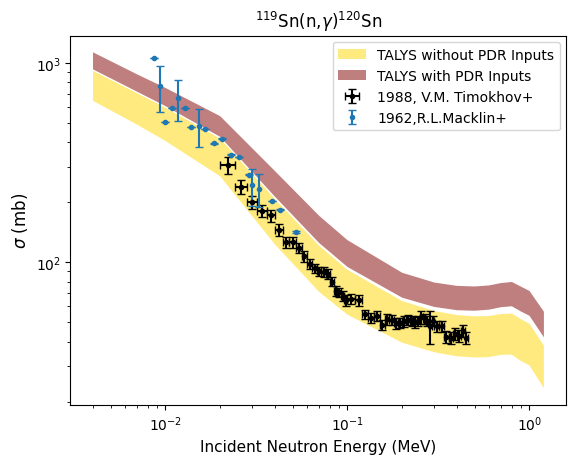
Figure 1: Astrophysical reaction rates with the PDR included and excluded.
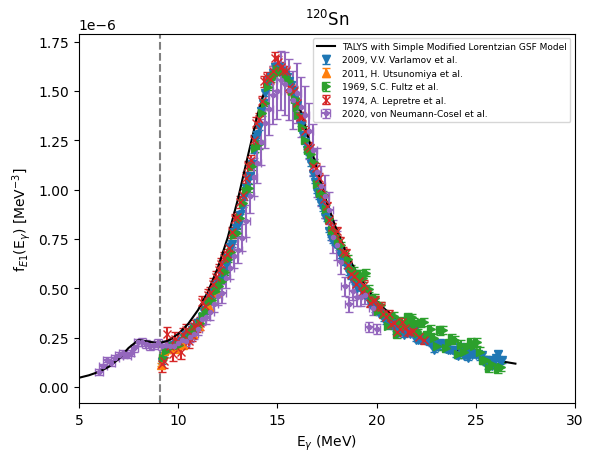
Figure 2: The gamma strength function of 120 Sn with a dobule Lorenzian fit with and without the PDR.
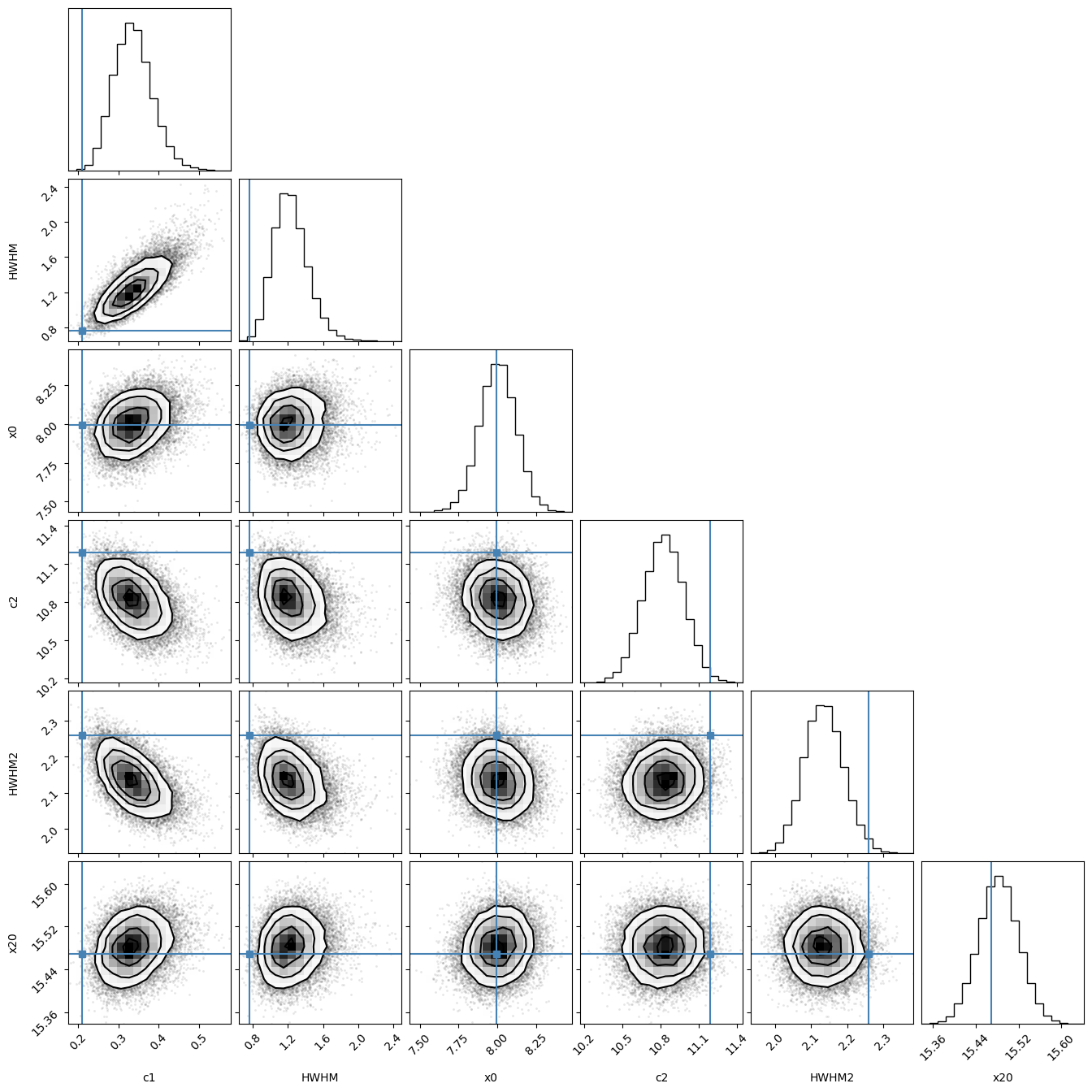
Figure 3: Corner plot of double Lorenzian parameters.
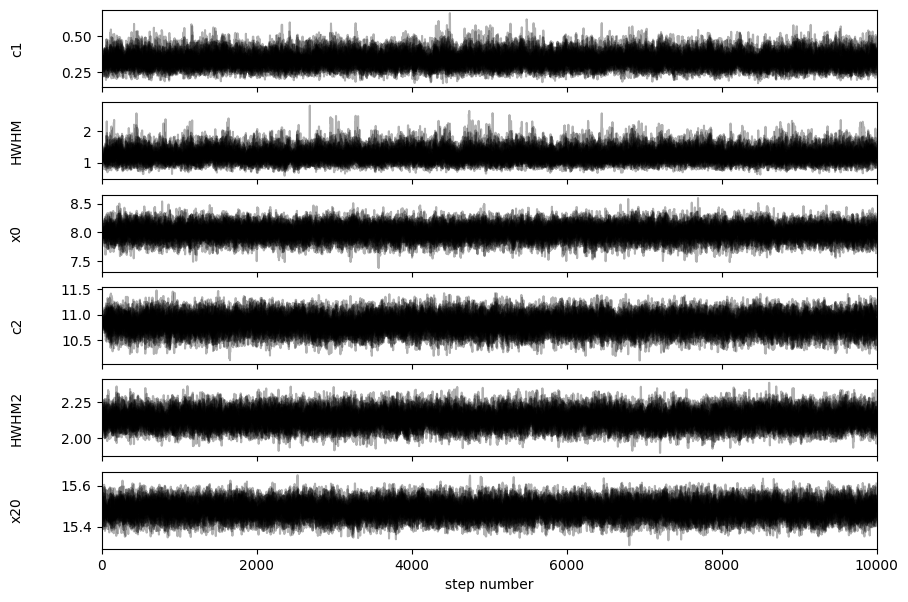
Figure 4: Chart showing convergence of Double Lorenzian Parameters over time.
The Bayesian optimization allowed for more accurate fitting of the gamma strength function. Figure 3 shows the resulting corner plot which displays the prior distributions of each parameter. The Figure 4 shows the convergence of the parameters as the step number increases. The result of this optimization was inputted into the TALYS simulation. The resulting fit can be seen in Figure 2 and the influence on the reaction rates can be seen in the Figure 1. There you can see that the PDR heavily increases the reaction rates.